
On 20 August 2026, more than 250 maritime professionals gathered at the Furama City Centre for the Nautical Institute (Singapore) Conference 2026, held alongside the Maritime and Port Authority of Singapore’s Safety@Sea Week. Under the theme "Seaworthiness and Seafarers in a Changing World," the programme ran across three strands: seaworthiness, seafaring as a career, and seafarer wellbeing. It drew people from across industry to discuss the challenges facing shipping and the people who keep it moving.
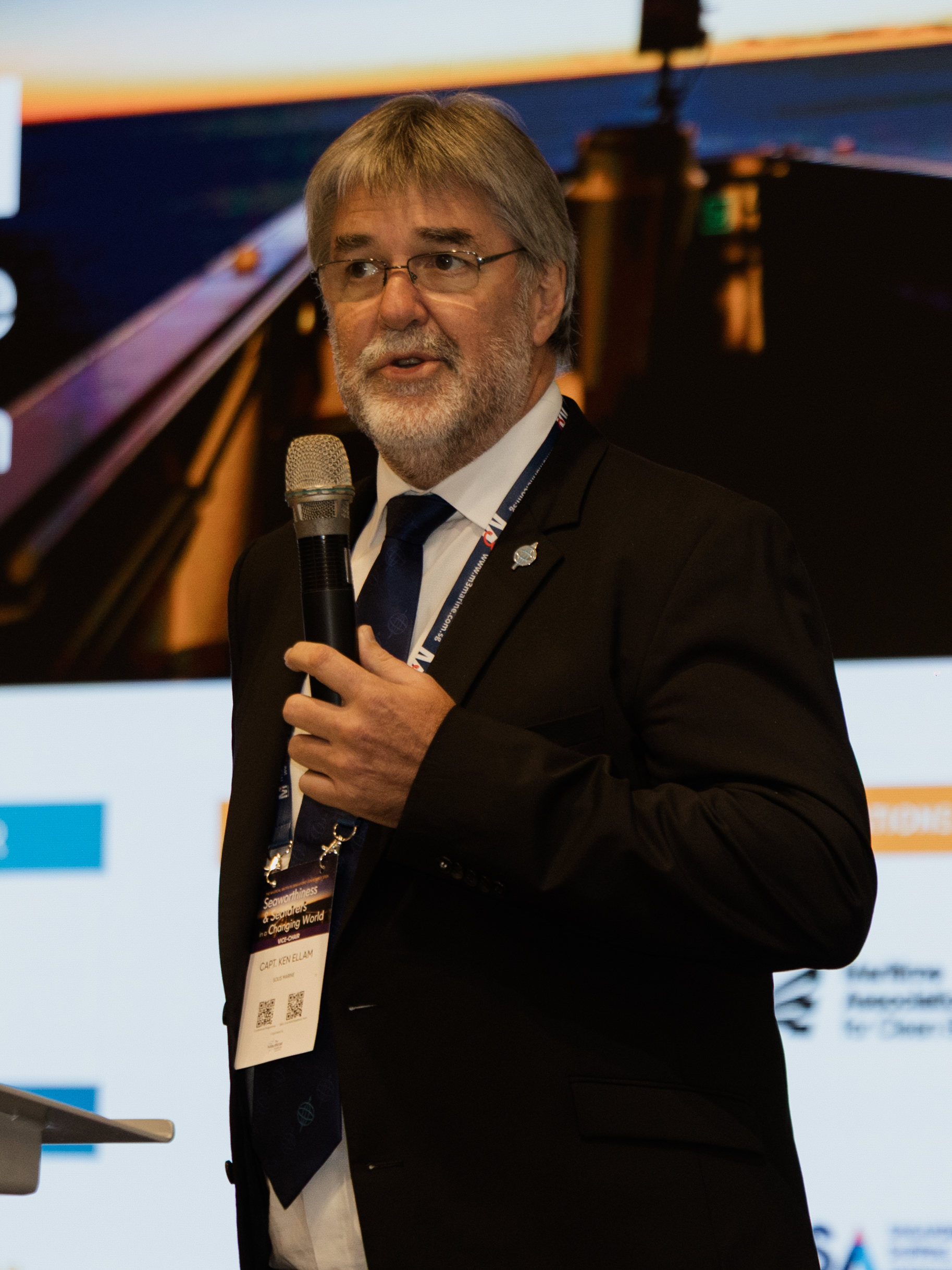
Solis Marine was actively involved: Director Captain Ken Ellam, Vice Chair of the Nautical Institute Singapore Branch, played a leading role in organising the conference, and colleagues Rosalind Blazejczyk, Fangxu Sun, Jun Hao Liew, Jia Ming Teo and Andrew Lynch attended. One theme stayed with us: a ship is only as seaworthy as the people who crew it, and looking after those people is not an optional extra. It is part of safe operations.
For the opening address. Mr. Ang Wee Keong, Chief Executive of the MPA, said every ship carries two forms of seaworthiness: the first can be surveyed - hull, machinery and cargo. While the second, the competence, readiness and wellbeing of the people on board, is harder to measure but no less important. Even the most advanced ship becomes a risk if its crew is under-prepared, under-resourced or under-supported. He set out three pillars: seafarers who are well-prepared, well-placed on safe and well-run ships, and well-supported. As Mr. Ang said in closing, a ship is only as seaworthy as the people who sail it.
At Solis Marine, we see the consequences of crew wellbeing, or the lack of it, in much of the casualty work we undertake. Fatigue, distraction and low morale rarely appear as the single named cause of an incident, but they sit behind a great many of them. A well-rested, supported and engaged crew makes better decisions, communicates more clearly and recovers faster when things go wrong. Investing in wellness is not charity; it is risk management.
The same theme ran through the keynotes. Mr. Nick Potter of AET and the MISC Group said the right response to a more complex world is not just to make ships capable of surviving it, but to make sure the people aboard can thrive. A point Captain Yves Vandenborn of NorthStandard echoed. Ms. Sakura Kuma of MOL illustrated it with the story of the LNG carrier LNG Saturn and its crew’s part in a rescue at sea.
Some of the most useful contributions came from serving seafarers, who spoke from direct experience. Captain Anand Sundaramoorthy of Pacific Basin Shipping (HK) Limited, a serving Master, set out the practical challenges of container ship compliance and the ongoing problem of mis declared cargo. A reminder that seaworthiness often depends on information the ship never sees until it is too late, much of it originating up the supply chain. He also shared the story of his epaulettes, handed to him on gaining his command from his own mentor, who had received them from his - a great tradition that shows the passing of responsibility from one generation of mariners to the next.
Chief Engineer Ms. Sophia Tan of Pacific Carriers Limited gave a peer view on retention: what keeps younger mariners in the industry, rather than what attracts them in the first place. And Second Officer Ms. Mona Humaira, also of Pacific Carriers Limited, spoke about the emotional and physical strain of navigating active geopolitical war zones. This kind of experience turns a general discussion of wellbeing into something real. These accounts were a useful reminder that the people we design systems and procedures for are often best placed to tell us whether they work.
Captain Belal Ahmed, Master Mariner and Chairman of Western Shipping Pte Ltd and Vice Chairman of The Mission to Seafarers Singapore, highlighted the work of the Missions to Seafarers and its role in crew welfare. As technology and AI reshape shipping, he said, leaders need to be more intentional about looking after their workforce, with real attention to mental health at sea. He also described how port welfare networks and support structures provide lifelines to seafarers facing isolation, contract stresses or sudden crises far from home.
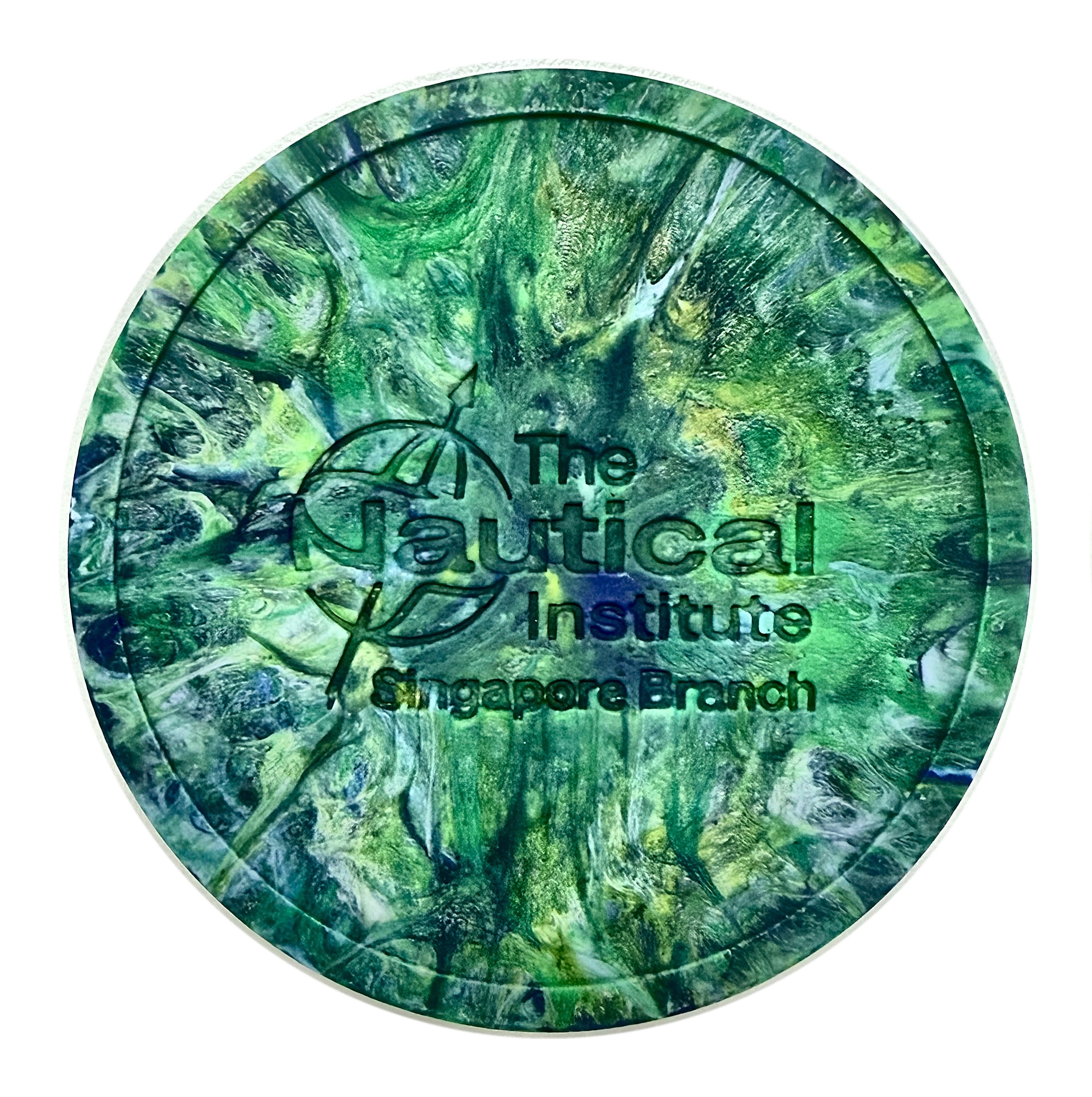
A related pressure came through in a presentation by Mr. Tom Peacock-Nazil, Founder and CEO of Seven Clean Seas and representing the Maritime Association for Clean Seas (MACS). He set out the scale of plastic marine pollution and, framing the issue around the IMO’s Action Plan on marine plastic litter from ships, said the industry should not simply wait for top-down regulation: everyday operators, managers and organisations can drive change from the bottom up, treating ocean plastic reduction as an ESG priority rather than a compliance box. Fittingly, Seven Clean Seas provided delegates with coasters made from recycled ocean plastic.
Captain Chris O’Flaherty then explained how that experience reaches the people who write the rules. Senior Technical Adviser and a representative for the Nautical Institute’s headquarters, he set out the work of the NI delegation at the International Maritime Organization, and how the Institute represents the interests of mariners there. Feedback, case studies and operational data from captains and crew are used to help shape international regulation, so that the standards applied on the bridge reflect the people who stand watch.
None of this is complicated in principle, but it does take sustained commitment rather than one-off gestures. What was encouraging about the mood in Singapore was how firmly wellbeing and sustainability have moved into the mainstream of the seaworthiness conversation. For those of us who investigate what goes wrong, that is welcome: every improvement in how crews are supported is, in the end, an improvement in safety.
Captain Ken Ellam left delegates with a related point: the discussions don’t end at the conference. “They make a real impact when you bring them back to your workplace and continue the conversations around important issues that affect seafarers.” That is the spirit in which we share these reflections.
Solis Marine is an independent marine consultancy providing casualty investigation, marine surveying, engineering and expert witness services worldwide. If we can help with a claim, a technical question or a survey, contact the team at www.solis-marine.com.